Introduction
The 'rural nursing' concept is not yet consensually defined in the literature. The
dimension of rural nursing practice, however, represents a practice committed to addressing
the problems of each person in a range of contexts, in the construction of different
forms of care. This reflects critically on the measures implemented 1.
Rural nursing professionals have skills that extend beyond general clinical practice,
including the ability to be with, advocate for the community, understand the local
culture, provide support, know and respect the environment, encourage preservation
and not harm nature, develop health education measures, and even provide advance care
planning, as well as palliative care 1,2.
In rural settings, health is often seen in varying ways depending on the location.
Health is often understood as the ability to perform daily work activities. Therefore,
there are many needs that are not exactly included in the notion of care adopted in
nursing models, especially those developed in urban areas, requiring healthcare professionals
to adapt them 1.
In addition, rural nursing professionals face a host of geographical, logistical,
and service structuring barriers when providing care. Long distances between the healthcare
unit and the population, lack of public transportation, the precarious infrastructure
of the units, access restrictions during rainy periods, work overload, lack of adequate
monetary compensation, the role of "do-it-all" and fragmented teams, with the absence
of other healthcare professionals to provide shared care, lead some professionals
to quit rural practice 3-8.
In addition to the aforementioned factors, there is a lack of undergraduate and postgraduate
training in rural nursing, both nationally and internationally, which contributes
to the invisibility of care for the rural population. In this sense, there is an urgent
need for professional training to integrate the theme into the political and pedagogical
projects of nursing courses, with the aim of contributing g to professional autonomy,
thus training nursing professionals who are capable of adapting and building rural
nursing knowledge and practices according to the specificities and needs of daily
work 1,9. Rural nursing training during undergraduate studies is also a need perceived by
rural nursing professionals 10.
Despite these factors, studies show that rural nurses implement their practice with
pleasure and satisfaction in a number of situations 9,11,12 and manage to develop characteristics such as closer bonds and belonging to the community,
being recognized by the community, producing holistic and culturally competent care,
having room for growth and learning from the work process, among other factors 12-15.
Rural nursing as a practice field is not yet well established, and there are no studies
dedicated to elucidating its concept. In this regard, making this concept explicit
helps to unveil the still nebulous field of rural nursing, as well as strengthen the
construction of the identity of rural nursing professionals and nursing as an academic
subject, based on the advancement of knowledge. Thus, the aim of this study is to
analyze the 'rural nursing' concept based on Walker and Avant's analytical model 16.
Materials and Methods
This is a conceptual analysis based on the analytical model proposed by Walker and
Avant 16, in which examining the structure and function of a concept is the purpose of the
analysis. The eight steps recommended by the authors were followed: i. Selecting the
concept of interest; ii. Determining the objectives or purpose of the analysis; iii.
Identifying all the uses of the concept that can be achieved; iv. Determining the
defining attributes; 5) Identifying a model case; 6) identifying additional cases;
7) Identifying the precedents and consequences of the concept, and 8) Defining the
empirical references.
The studies included in the analysis were selected via a scoping review, following
the steps recommended by the Joanna Briggs Institute's reviewers' manual, based on
the theoretical framework proposed by Arskey and O'Malley 17. Prisma Extension for Scoping Reviews (Prisma-ScR) was used for writing. The review
protocol was registered on the Open Science Framework Platform (doi: 10.17605/OSF.IO/RTJN3).
To avoid replicating studies, a preliminary search was conducted in the "Cumulative
Index to Nursing and Allied Health Literature" (Cinahl), "Medical Literature Analysis
and Retrieval System Online" (Medline), and PubMed databases, resulting in no published
studies on the concept of 'rural nursing' itself.
Given that the concept of interest selected was rural nursing, the review's guiding
question "How is the 'rural nursing' concept described in the setting of nurses' work
in rural healthcare services?" was developed using the PCC strategy, where 'P' stands
for population - nurses; 'C' for concept - rural nursing; and 'C' for context - rural
healthcare services.
The study search was conducted in August and September 2022 and then updated in March
2024. The following MeSH descriptors related to the PCC strategy were used: nurses, rural nursing, and rural health services. The search strategy established was nurses AND rural nursing AND rural health services, as well as their respective synonyms in Portuguese and Spanish, where applicable.
The databases selected were Web of Science, Scopus, PubMed, Embase, Medline, Cinahl,
Latin American and Caribbean Health Sciences Literature (Lilacs), Cochrane Central,
and Nursing Database (Base de Dados em Enfermagem - BDEnf). The data were accessed
through the Journal Website of the Coordination for the Improvement of Higher Education
Personnel (Coordenação de Aperfeiçoamento de Pessoal de Nível Superior - Capes), using
the Federated Academic Community (Comunidade Acadêmica Federada - CAFe), using a login
and password provided by the Universidade Federal do Rio Grande do Norte, Brazil.
The data was collected manually by two independent researchers, with no need for review
by a third reviewer due to disagreements.
Searches were also conducted on the following databases: Google Scholar, the Capes
Theses and Dissertations Catalog, the Brazilian Digital Library of Theses and Dissertations,
and the following websites: Diva, Dart-Europe, Eric, Ethos, Rcaap, Theses Canada,
National EDT, and EBSCO Open dissertations. The following websites were also searched:
International Council of Nurses, Rural Health Information Hub, Center for Rural Health,
Rural Seeds, National Rural Health Resource Center, and Rural Nursing Organization.
The same search strategy as defined for the databases was used. Another search strategy
was to search for studies in specialized journals on the theme. For this purpose,
the Online Journal of Rural Nursing and Health Care was identified and accessed.
The search results were refined based on the review's eligibility criteria, which
included studies available in full free of charge, in English, Portuguese, or Spanish,
which addressed the study's objective, with rural nursing as the central topic of
research. Literature reviews and duplicate studies (considered only once) were excluded.
Given the scope of the study, no time frame was set for the searches.
The studies included were pre-selected and the titles and respective abstracts were
read; the final sample was reached after reading the full texts. The data was organized
using Microsoft Excel 2016® spreadsheets and, once the final sample had been established, the s following data
collection indicators were extracted: Publication year and country, identification
of the use of the concept; precedents of the concept (events or incidents that must
exist before the occurrence of the concept); consequences of the concept (events or
incidents that occur as a result of the occurrence of the concept); defining attributes
(characteristics most frequently associated with the concept and which allow a broader
view of it); and empirical references of the concept (classes or categories of real
phenomena J which, by their presence or existence, demonstrate the occurrence of the
concept itself [16]).
Results
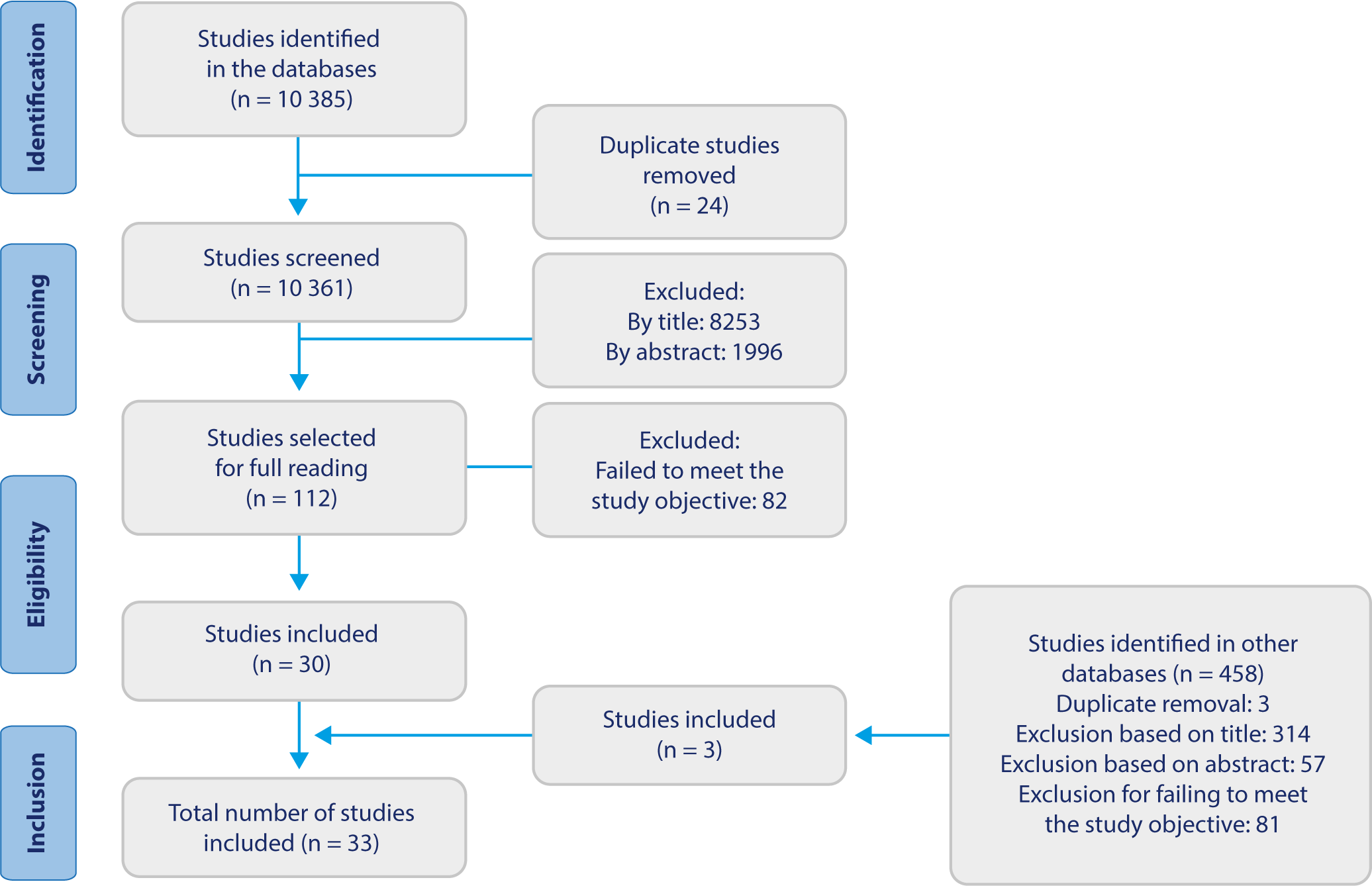
The final sample of studies that comprised the review were 33 studies. Of these, 31
were scientific articles, one was a master's thesis, and one was a doctoral dissertation.
The following flowchart illustrates the sample collection process.
Figure 1
Flowchart of the Selection Process for the Studies Included in the Review, Natal,
Rio Grande do Norte, Brazil, 2024
Source: Prepared by the authors, adapted from Prisma-ScR.
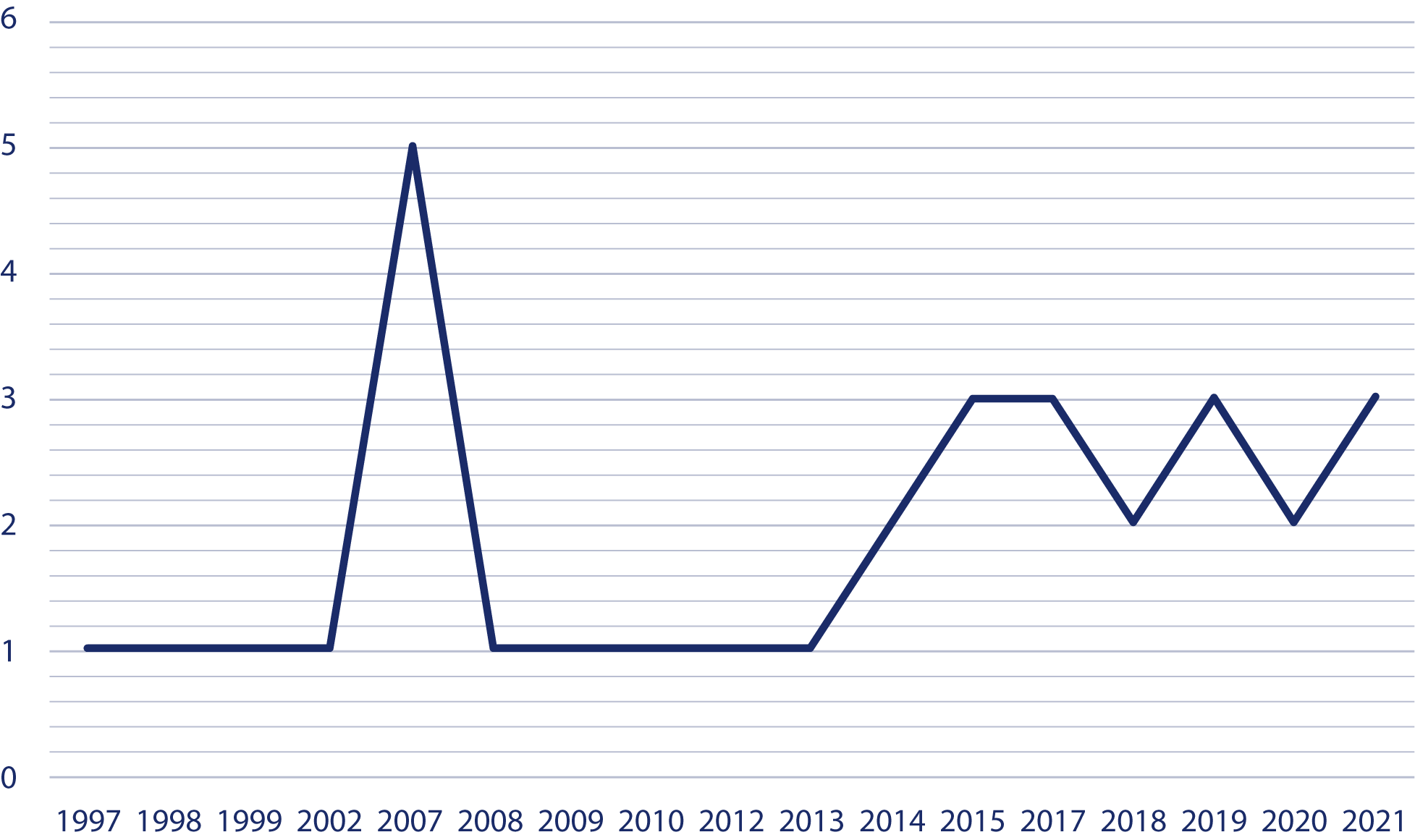
Regarding the years when the studies were published, the year 2008 was highlighted,
as well as the period ranging from 2015 to 2021, as can be seen in Figure 2.
Figure 2
Publication Year of the Studies that Comprised the Sample in Absolute Numbers, Natal,
Rio Grande do Norte, Brazil, 2018
Source: Prepared by the authors.
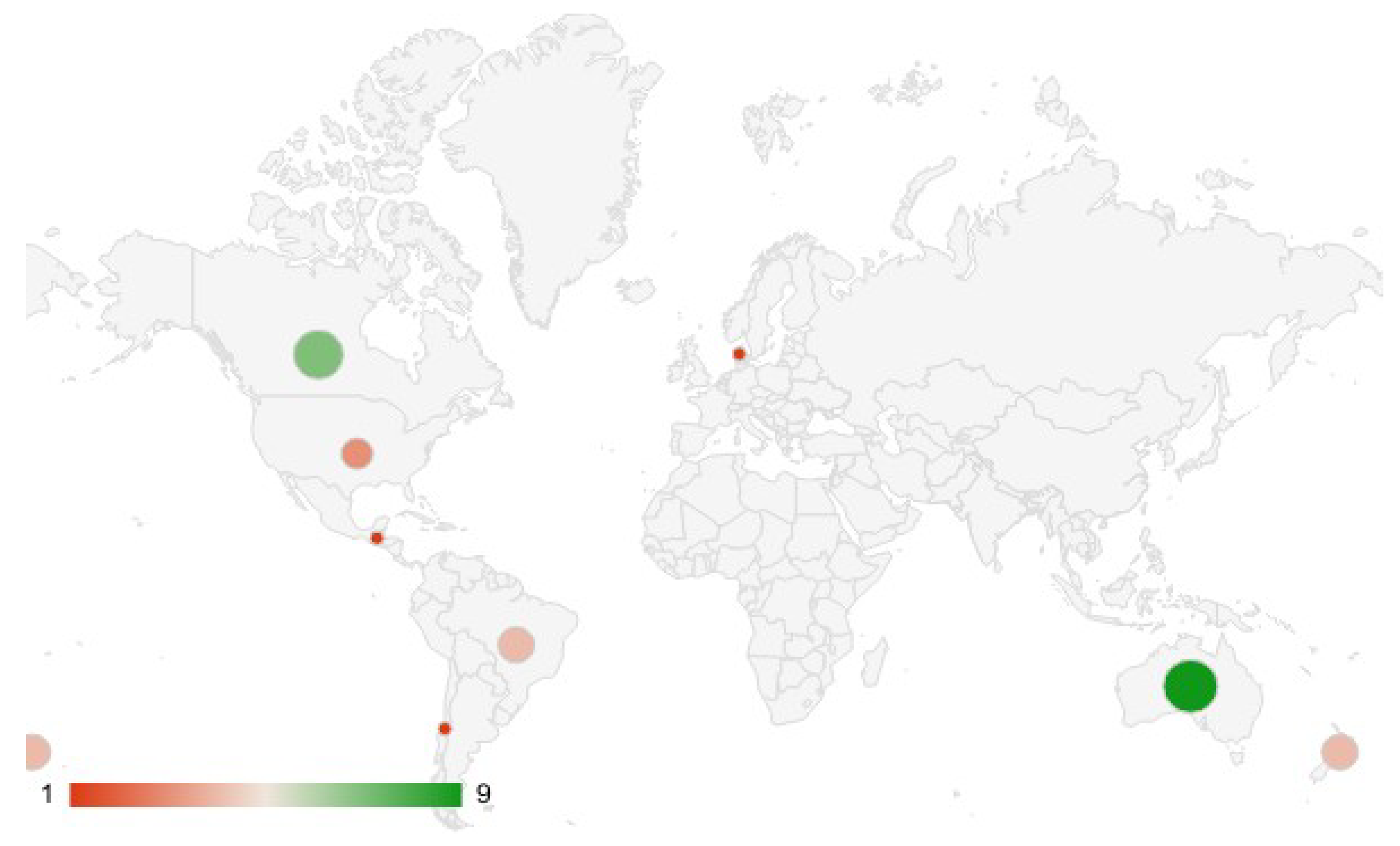
Regarding the countries where the studies were published, Australia was prominent,
followed by some countries in the global North, as shown in Figure 3.
Figure 3
Studies that Comprised the Sample by Country of Origin. Natal, Rio Grande do Norte,
Brazil, 2018
Source: Prepared by the auhtors.
Throughout the studies analyzed, only two explicitly highlighted the rural nursing
concept. Regarding the defining attributes, connectivity to the community, proficiency
in more than one specialty, and having a wide range of skills were highlighted. The
definitions found and the concept's attributes are shown in Table 1, along with their precedents and consequences.
Table 1
Uses, Defining Attributes, Precedents, and Consequences of the 'Rural Nursing' Concept.
Natal, Rio Grande do Norte, 2024
|
Concept Uses
|
|
The definition of rural nursing includes nurses who work outside the main metropolitan
areas, where patients have reduced access to healthcare services 4.
|
|
Rural nursing professionals are specialists with a generalist focus who provide care
to patients throughout their lives with health problems in six nursing subspecialties:
Medical or surgical, obstetrics, pediatrics, geriatrics, psychiatry, and emergency
or trauma nursing 18.
|
|
Defining Attributes
|
|
Community connectivity 5,19-22
|
Interpersonal skills 29
|
|
Care towards the community 23
|
Recognition by the community 22
|
|
Cultural competence 24
|
Creativity 9,20
|
|
Holistic care 13
|
Sense of belonging to the community 8
|
|
Proficiency in more than one specialty 23,25,26
|
Sharing values 30
|
|
Range of skills 27,28
|
Confidentiality 25
|
|
Concept Precedents and Consequences
|
|
Precedents
|
Consequences
|
|
Vocation 1,21
|
Holistic care 23
|
|
Work-related beliefs 21
|
Job satisfaction 8,10-12,14,31
|
|
Belief that they provide quality care 23
|
Need to study rural practice as an undergraduate 10,14
|
|
Willingness to live in rural areas 10,14
|
A sense of appreciation from the community 10,31,32
|
|
Identifying with family healthcare 31
|
Community bond 8,12,31,34,35
|
|
Personal identification with the countryside 11,14,32
|
Autonomy 7,18,36,37
|
|
Adaptability 9
|
Difficulties in addressing the population's specificities 34
|
|
Previous contact with rural life or work 13,14,33
|
Work overload 14,34
|
|
Growing up in a rural environment 7,14
|
Humility 9
|
|
Post-graduate experience in rural areas 14
|
Dissatisfaction with work conditions 8
|
|
Desire to establish a family in a rural area 14
|
Role of educator 35
|
|
Lack of urban jobs 7
|
Direct, comprehensive care 33,35
|
|
Experiences with rural settings in education/training 7
|
Professional isolation 4,7,13,22,24,25,34,37
|
|
Opportunity to exercise advanced practice 11
|
Lack of professional and monetary recognition 3
|
|
|
Practice influenced by the setting 3,22
|
|
|
"Do-it-all" role 7
|
Regarding the empirical references, these comprised the identity of rural nursing
professionals 4,13 and rural nursing in advanced practice 27,37.
Discussion
At an international level, despite the fact that countries have both urban and rural
geography, relatively limited attention has been placed on research into the nature
of rural and remote nursing practice, as well as the characteristics of the nursing
professionals who live and work in these areas 11. It is even questioned whether there is a difference between nursing practice in
urban and rural healthcare units 38.
The challenge of finding definitions for the term 'rural' stems in part from the different
needs and uses of the definitions. In the nursing and medical literature, the definitions
of rural and remote practice reflect the skills and knowledge needed by professionals
working in areas where distance, climate, limited resources, and limited support shape
the character of their lives and professional practice 11, which is in line with the uses of the concept found in the literature.
Rural nursing practice is different in nature and scope from nursing practice in urban
environments. It is distinct in its boundaries, intersections, dimensions, and even
at its core. The core of all nursing is care, and care is the substance of the relationship
between the nursing professional and the patient; consequently, what happens at the
core of rural nursing is something different from what happens at the core of nursing
anywhere else. Being a rural nurse means that when a nurse saves a life, everyone
in town recognizes that she or he was there; and when a nurse loses a life, everyone
in town recognizes that she or he was there. Being a rural nursing professional means
knowing how to manage what is available, where it is, and how to live with the consequences
39.
Regarding the defining attributes of the concept, these showed that rural nursing
professionals create close bonds with the community and may even become part of it.
In addition, they share values and are recognized as professionals with whom the community
can establish bonds of trust, which are characteristics that are strengthened by their
daily practices and the fact that they identify with the rural area in which they
work 8.
In addition to the aforementioned attributes, proficiency in more than one specialty
is often mentioned in the field of rural nursing, which is endorsed by the World Health
Organization when it recommends that nursing professionals should not limit themselves
to merely supervising the sick or treating chronic and acute illnesses, but should
also be healthcare pioneers and collaborate with various fields to motivate vulnerable
populations 40.
Regarding the concept's precedents, most of them are related to previous contact with
rural areas, a trend already found in the literature, which indicates a predilection
for working in rural areas among individuals from or with previous contact with rural
environments 38. The consequences of the concept, in turn, denote the limitations and possibilities
of the professional practice of rural nurses, S which indicates a balance of factors
that can lead to pleasure and/or suffering in the work environment. It should be emphasized
that the factors that hinder practice, such as dissatisfaction with work conditions,
professional isolation, lack of professional and monetary recognition, and any others,
must be overcome to improve the quality of life at work for rural nursing professionals
41.
According to international data, nursing professionals have a significant role in
providing healthcare services in rural areas, where the number and type of providers
are limited, and where they often have to fill in the gaps. An aging workforce, limited
opportunities for professional development, and professional isolation exert pressure
on a replacement that is already known to be difficult to recruit. Still, the current
rural nursing workforce is not being replaced, and the shortage of these professionals
in rural areas is a constant concern worldwide 42.
The demands of rural nurses also aim to overcome the lack of training opportunities
in formal education and the lack of availability of continued education, long journeys
to areas far from healthcare facilities, and the lack of awareness of the specific
needs of these advanced generalists are the basis for the curriculum of a rural initiative/leadership
project 43.
Other precedents and consequences such as job satisfaction, direct comprehensive care,
professional isolation, and experience with the rural setting in education were identified
in a systematic review with a meta-synthesis addressing the reason for the choice
of rural practice by nursing professionals. The review identified three dimensions
related to predilection: personal, | professional, and locational 38, which prompts reflection on whether the professional identity of the rural nurse
is constructed before or after professional practice.
Regarding this identity, it is one of the empirical references of the 'rural nursing'
concept and is referred to in the literature as self-perceived stances, values, knowledge,
beliefs, and skills that are shared with other people within a professional group
in the workplace, obtained through a socialization process. Specifically, the professional
identity of rural nursing is still scarcely mentioned in international literature
10.
Advanced practice rural nursing was another empirical reference for the 'rural nursing'
concept, and the opportunity to practice it is sought after by nurses, thereby constituting
one of the precedents of the concept 18. For the International Council of Nurses, advanced practice nursing (APN) refers
to a nursing professional who has acquired complex decision-making skills, a specialized
knowledge base, and clinical competencies focused on expanded practice, the attributes
of which are leveled by the country and/or context in which they are licensed to practice,
with a master's degree course recommended for the entry-level 44.
Authors, using the same conceptual analysis model adopted in this study, defined APN
as the specialized knowledge employed by a licensed and qualified nursing professional
to make decisions at complex and advanced levels, and apply the relevant clinical
skills to implement the role of APN in healthcare, thus integrating practice, theory,
teaching, research, management, and leadership 45.
In the rural setting, the presence of rural nurses with advanced practice can contribute
to improving the health indicators of the population and their quality of life, given
the knowledge and skill base that these professionals hold, which can even intervene
early in a patient's condition. Rural nursing professionals themselves recognize that
their APN training has enabled them to act more autonomously, to perform detailed
patient assessments, and to initiate or manage treatment in the context of interprofessional
care 46,47.
To use the 'rural nursing' concept, the following model case is suggested: BNS, 27,
a rural nurse from a primarily rural municipality in northeastern Brazil, visited
the rural area to bandage the diabetic foot of JPM, a subsistence farmer. She seized
the opportunity to perform health education about the disease and also held a nursing
consultation to assess him globally. After performing interventions such as assessing
peripheral neuropathy, calculating cardiovascular risk, checking current blood glucose
levels, and reinforcing guidance on insulin therapy, BNS assessed the family members
who lived with JPM, identifying hypochromic spots on his youngest son, compatible
with suspected leprosy. She promptly referred him to the basic healthcare unit, advised
him on the relevant care, and scheduled an examination of his contacts, ensuring that
the family kept the case confidential due to the stigma surrounding the disease. The
family expressed gratitude and created a bond with BNS and, to materialize this feeling,
gave her a jar of homemade jam.
Regarding the counter-case, it follows: BNS, 27, a rural nurse from a remote municipality
in northeastern Brazil, conducted a home visit to perform a dressing on the diabetic
foot of JPM, a subsistence farmer. After finishing the dressing, she provided some
guidance and supplies for changing the dressing at home, if necessary, and returned
to the basic healthcare unit.
In relation to the model case and the counter-case, by comparing the two, it is possible
to emphasize the real contribution of rural nursing to the care of communities that
(r)exist in the rural setting, and it is worth noting them as examples to discuss
the rural nursing concept, which promotes critical thinking and the advancement of
knowledge in the field.
Conclusion
The conceptual analysis based on the framework adopted allowed the concept of rural
nursing, its uses, attributes, precedents, consequences, and empirical references
to be elucidated.
Therefore, the 'rural nursing' concept is defined as nursing practice in rural areas,
according to the definition of the term 'rural' adopted by each country, by professionals
who are qualified and specialized in various skills, who work with an understanding
of the needs of the rural population and its sociocultural aspects, providing holistic
care to the population, and who may become a part of it.
The correct application of the concept helps to establish the professional identity
of rural nursing professionals and to strengthen nursing as a science through the
production and advancement of knowledge.
As for the limitations, it is worth noting that it was not possible to access some
documents deemed important for the review as they were not available in full free
of charge via the means accessed; moreover, the lack of inclusion of languages other
than Spanish, English, and Portuguese may have excluded studies that are relevant
to the field of rural nursing.
