
|
|
ARTICLE

Catalina Sepúlveda Rivas 1
Edith Rivas Riveros 2
Edgardo Alvarez Muñoz 3
Catalina Manríquez Arriagada 4
Gabriela Mansilla Alvarado 5
Francisco Sarabia Inyelco 6
1 Universidad Santo Tomás, Chile
 0000-0002-5256-2270
 catalinasepulvedan@santotomas.cl
2 Universidad de La Frontera, Temuco, Chile
0000-0002-9832-4534
edith.rivas@ufrontera.cl
3 Universidad San Sebastián, Chile
0000-0002-2882-7494
edgardo.alvarez@uss.cl
4 Universidad Santo Tomás, Chile
0009-0006-0622-5069
ctlnnrmljndr@gmail.com
5 Universidad Santo Tomás, Chile
0009-0005-3896-3392
gabrielamansillaalvarado@gmail.com
6 Universidad Santo Tomás, Chile
0009-0005-8599-2639
franciscosarabia47@gmail.com
Theme: Health, well-being, and quality of life promotion
Contribution to the field: Nurses perform a vital role in mitigating the effects of climate change by promoting nursing practice in sustainable environments. This review delves into the environmental awareness of nursing professionals, supporting practice based on the principles of Nola Pender's health promotion theory, which contributes to the development of more conscious and responsible nursing practice from an environmental perspective.
Received: 24/03/2025
Sent to peers: 29/05/2025
Approved by peers: 13/06/2025
Accepted: 29/07/2025
To reference this article / Para citar este artículo / Para citar este artigo: Sepúlveda C, Rivas E, Álvarez E, Manríquez C, Mansilla G. Environmental Awareness and Sustainable Behavior in the Nursing Field: A Scoping Review Based on Nola Pender's Theory. Aquichan. 2025;25(4):e2545. DOI: https://doi.org/10.5294/aqui.2025.25.4.5
Abstract
Introduction: Climate change is a global
threat that impacts health, well-being, and healthcare systems. In this
context, nursing holds a key role in promoting health and environmental
sustainability.
Objective: To map the existing evidence related to environmental awareness and sustainable behavior in nursing practice from the perspective of Nola Pender's health promotion theory.
Materials and Methods: A scoping review following the guidelines of Arksey and O'Malley and the Joanna Briggs Institute. The
search used the following key terms: "Nursing" AND
"Environmental Sustainability" AND "Sustainable Behaviors"
in PubMed and Scopus. Articles in English and Spanish from the last five years
were included. Preselection was based on the reading of the title, abstract,
and introductory text; the selected studies covered areas of nursing practice.
Results: Seven articles from Africa, Asia, and Europe met the criteria of this review, of which five were
quantitative, one was qualitative, and one was mixed. Pender's theory applied
to nursing and environmental sustainability highlights the influence of cognitive,
interpersonal, and environmental factors on nurses' pro-ecological behavior.
The environmental awareness of nursing professionals is a key factor in the
adoption of sustainable practices; however, there are barriers that hinder the
effective implementation of such practices.
Conclusions: The findings highlight the
importance of measuring and improving attitudes toward sustainability with
validated tools, which would favor a sustainable and efficient work
environment.
Keywords (Source: DeCS): Environmentalism; nursing; practical nursing; health promotion; review.
Resumen
Introducción: el cambio climático es una amenaza global que impacta la salud, el bienestar y los sistemas sanitarios. En este contexto, la enfermería juega un papel clave en la
promoción de la salud y la sostenibilidad ambiental.
Objetivo: mapear la evidencia
existente relacionada con la conciencia y el comportamiento ambiental
sostenible en la práctica de enfermería bajo la mirada de la teoría de la
promoción de la salud de Nola Pender.
Material y método: revisión de alcance
conducida por las orientaciones de Arksey y O'Malley
y el Instituto Joanna Briggs. La búsqueda
utilizó los términos clave: "Nursing" AND "Environmental Sustainability" AND "Sustainable Behaviors" en PubMed y Scopus. Se incluyeron
artículos en inglés y español de los últimos cinco años. La preselección se dio
mediante lectura de título, resumen y texto introductorio; los estudios
seleccionados se enfocaron en áreas de la práctica enfermera.
Resultados: siete artículos
provenientes de África, Asia y Europa respondieron a los objetivos de esta
revisión, cinco cuantitativos, uno cualitativo y uno mixto. La teoría de Pender
aplicada a la enfermería y la sostenibilidad ambiental destaca la influencia de
factores cognitivos, interpersonales y ambientales en el comportamiento proecológico de las enfermeras. La conciencia ambiental de los profesionales de enfermería
es un factor clave para la adopción de prácticas sostenibles; sin embargo,
existen barreras que dificultan la implementación efectiva de dichas prácticas.
Conclusiones: los hallazgos destacan
la importancia de medir y mejorar las actitudes hacia la sostenibilidad con
herramientas validadas, lo que favorecería un entorno de trabajo sostenible y
eficiente.
Palabras clave (Fuente DeCS): Ambientalismo; enfermería; enfermería práctica; promoción de la salud; revisión.
Resumo
Introdução: As mudanças do clima são uma ameaça global que
afeta a saúde, o bem-estar e os sistemas de saúde. Nesse contexto, a enfermagem
desempenha um papel fundamental na promoção da sustentabilidade ambiental e da
saúde.
Objetivo: mapear as evidências existentes relacionadas à
conscientização e ao comportamento ambiental sustentável na prática de
enfermagem sob o olhar da teoria da promoção da saúde de Nola Pender.
Materiais e métodos: revisão de escopo conduzida segundo as orientações de Arksey e O'Malley e do
Instituto Joanna Briggs. A busca utilizou os termos-chave: "Enfermagem" AND "Sustentabilidade
ambiental" AND "Comportamentos sustentáveis" de PubMed e Scopus. Foram incluídos artigos em inglês
e espanhol dos últimos cinco anos. A pré-seleção se deu por meio da leitura do
título, do resumo e do texto introdutório. Os estudos selecionados focaram
áreas da prática de enfermagem.
Resultados: sete artigos da África, da Ásia e da Europa
responderam aos objetivos desta
revisão, sendo cinco quantitativos, um qualitativo e um misto. A teoria de
Pender aplicada à enfermagem e à sustentabilidade ambiental destaca a influência de fatores cognitivos, interpessoais e ambientais no
comportamento pró-ecológico dos profissionais de enfermagem. A consciência
ambiental destes é um fator fundamental para a adoção de práticas sustentáveis;
no entanto, existem barreiras que dificultam a implementação efetiva de tais
práticas.
Conclusões: Os resultados destacam a importância de medir e
melhorar as atitudes em relação à sustentabilidade com ferramentas validadas
que favoreçam um ambiente de trabalho sustentável e
eficiente.
Palavras-chave (Fonte DeCS): Ambientalismo; enfermagem; enfermagem prática; promoção da saúde; revisão.
Climate change is causing serious and irreversible damage to both ecosystems and human communities, threatening environmental sustainability and posing a growing concern for all societies and global economies 1. Environmental scientists have emphasized the urgency of adopting global measures and have advocated for a drastic reduction in carbon dioxide (CO2) emissions, positioning environmental sustainability as one of the greatest challenges facing contemporary society 2.
At the general level, there has been an alarming increase in critical climate events, including extreme temperatures, droughts, desertification, floods, forest fires, and reduced access to water resources due to pollution 3-5. These climate phenomena suggest that almost one-fifth of the planet will be excessively hot for humans by 2070 6.
Climate change poses a vital threat, affecting the physical environment as well as all aspects of natural and human systems, including social and economic conditions, the functionality of health systems, and human health 7. In this latter regard, its multiple effects on human health have been documented, such as an increase in infectious diseases, respiratory disorders, heat-related morbidity and mortality, and malnutrition due to food insecurity 8-9. Consequently, with the worsening of these health impacts, compounded by other coexisting crises, populations worldwide are increasingly relying on health systems as their first line of defense 10.
From this perspective, sustainability has become particularly relevant in the field of healthcare, being included in the global health agenda by the World Health Organization and the United Nations, which reflects its importance in the Sustainable Development Goals for 2030 11. To move toward these goals, collaborative interprofessional efforts are required, as well as changes in high-level policies and decisions.
In this context, sustainability knowledge is closely related to awareness of the theoretical aspects of sustainable development, while attitudes toward sustainability refer to concern for this issue, translated into sustainable behaviors 12. Thus, behavior toward sustainability entails actions that support and contribute to sustainable development.
As expressed in various conceptual frameworks and models, the environment is one of the core elements of nursing care. However, individual nurses and professional associations, such as the International Council of Nurses, report gaps in their training to address issues related to sustainability and climate change, highlighting the need for these topics to be included in the professional curriculum 13-14. In addition, nurses themselves do not perceive their role in adapting to this phenomenon, and many are unaware of aspects of these changes 15.
Despite this lack of awareness and training weaknesses, nursing professionals unconsciously and indirectly work on the front lines to mitigate climate change (reduce or prevent greenhouse gas emissions) and achieve better climate adaptation (reduce vulnerability to harmful effects), just as they are committed to protecting and promoting the health of their patients 14.
Moreover, some authors assert that nurses have essential advantages in this field compared to other healthcare professionals. First, nurses constitute approximately 60 % of healthcare personnel worldwide. Second, nurses are trustworthy, as they are often the first healthcare provider people meet when seeking care. And third, they are close to the people most vulnerable to climate change 16-17.
Furthermore, in their own workplaces, nurses contribute to reducing greenhouse gas emissions by decarbonizing their work practices, thereby fulfilling an essential role in community education on climate change and the implementation of sustainable environmental practices 15.
Faced with this situation, the health sector, and particularly nurses, are essential in responding to sustainability issues 1819, as they are agents of change capable of improving public health and managing health resources effectively.
Consequently, based on these approaches, this study conducts a literature review to comprehensively map and analyze the existing evidence on sustainable behaviors in nursing practice, with a particular focus on their relationship with the environment to answer the question: What is the level of environmental awareness and sustainable behavior among nurses?
The review is conducted under the disciplinary scope of Nola Pender's health promotion theory 20, a conceptual theoretical model that allows for the identification of behavioral patterns and practices that promote sustainability within the nursing profession. The model is a proposal to integrate nursing theories with behavioral sciences, based on the concept of health promotion 21. It has been used by nurses to understand healthy behaviors and develop health promotion actions that bring significant benefits to people's quality of life. The aim is to base the concept of health promotion on actions that maintain or enhance the well-being of the individual. The model provides a solid foundation for clinical nursing practice, enabling the planning and implementation of interventions and the evaluation of actions.
In the global context of greenhouse gas emissions, Chile accounts for a total of 5.46 million metric tons of CO2 equivalent to gross emissions in the health sector. When compared to other countries globally, it ranks 33rd among the 68 countries analyzed in a study 22. In other words, it is in an intermediate position in the world ranking. Although it is not one of the main emitters, the country's emissions are still significant for the environment and climate change. This analysis highlights the urgent need for Chile to strengthen its carbon emission reduction policies and strategies 23. Despite its intermediate position, the country has a responsibility to commit to global sustainability efforts and to meet the international targets set to mitigate the effects of climate change. For this purpose, a roadmap has been developed that establishes the following key areas: a) committing to zero-emission healthcare; b) linking zero-emission healthcare with health equity and climate resilience; c) promoting cross-cutting actions that integrate climate and health; and d) communicating and activating, thereby training healthcare professionals as leaders in the fight against climate change.
This study is a scoping review, based on the methodological framework proposed by Arksey and O'Malley 24 and the Joanna Briggs Institute 25, with the aim of mapping the existing evidence related to environmental awareness and sustainable behavior in nursing practice. The literature review is specific to this theme and to research its use as a process in the context of global nursing.
The search was completed in December 2024. The search terms included the keywords: "Nursing" AND "Environmental Sustainability" AND "Sustainable Behaviors", which were used in the PubMed and Scopus databases to retrieve literature. The limits applied were articles in English and Spanish, and publication period, limiting the search to articles published within the last five years. The predefined inclusion and exclusion criteria are shown in Table 1.
Table 1. Search Inclusion Criteria
Domains |
Inclusion |
Sample |
Studies that included nurses in a healthcare setting. |
Phenomenon of interest |
Nurses' awareness and behaviors regarding climate change and sustainable practices in healthcare organizations. |
Barriers and facilitators for the implementation of sustainable practices in nursing in healthcare settings. |
|
Design |
Studies that directly analyze nurses' sustainable practices, attitudes, and barriers. |
Evaluation |
Studies evaluating nurses' environmental awareness and behaviors toward climate change in healthcare settings. |
Source: Prepared by the authors.
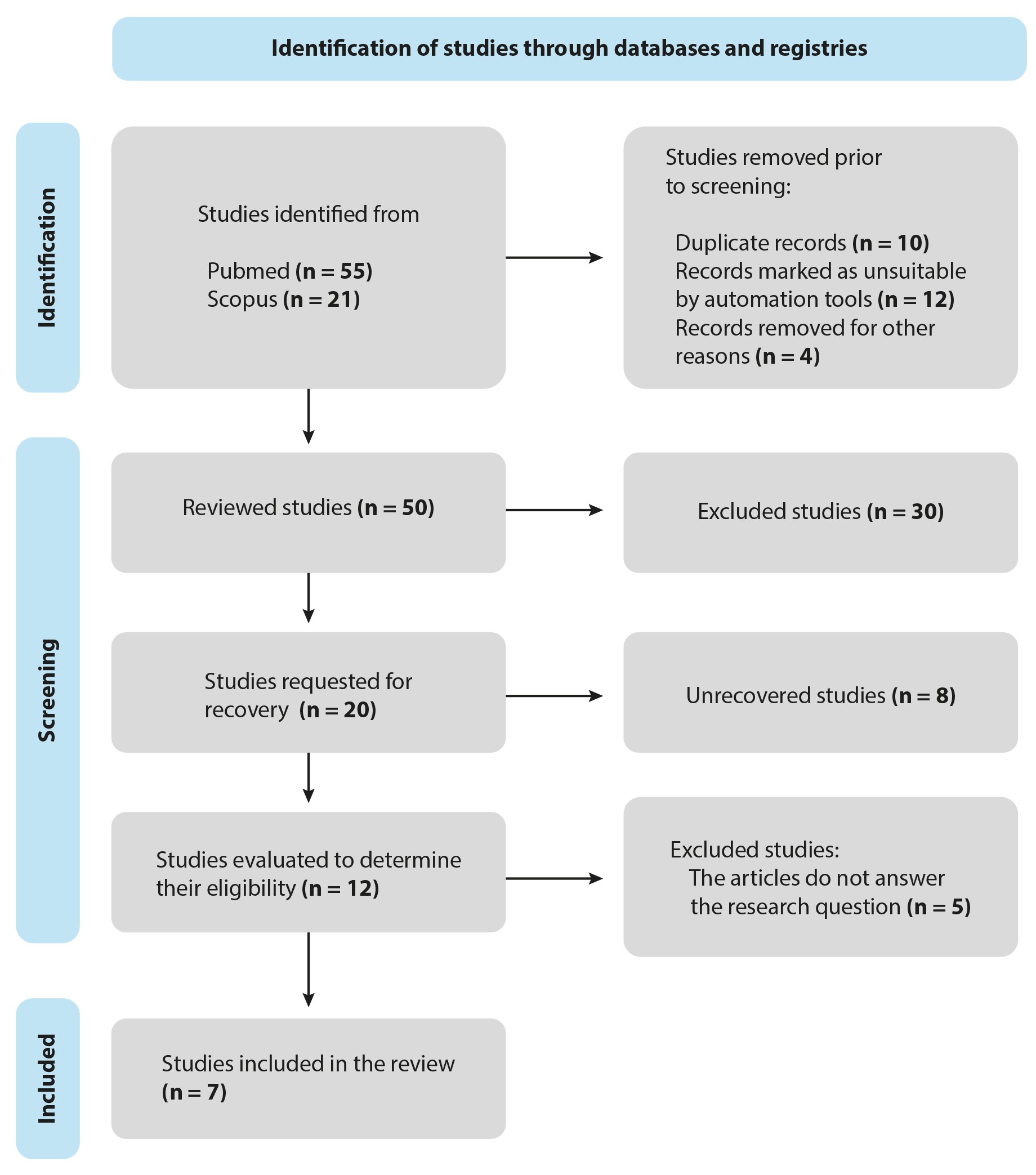
The selection process for sources was conducted following a clear and transparent protocol. Each phase of the process is documented to illustrate the selection process. The flow includes:
· Initial identification: review of titles and abstracts to remove articles that do not meet the inclusion criteria.
· Evaluation: selection of articles based on inclusion and exclusion criteria, which proceed to the next stage.
· Duplicate exclusion: removal of duplicate records.
· Full-text retrieval: obtaining the full articles of studies that meet the criteria.
Figure 1. Flowchart for Article Selection according to PRISMA Guidelines
Source: Prepared by the authors.
For the theoretical analysis, an interpretive matrix was designed based on the main constructs of the health promotion model: personal, cognitive, affective, and interpersonal factors, as well as the influence of the physical and social environment. Using this structure, the contents of each article included in the sample were reviewed to identify whether there was explicit or implicit mention of these factors and how they related to sustainable environmental behaviors. The recommendations presented stem from this triangulation between the findings of the articles and the elements of the model, which allows for the development of practical guidelines based on theory.
The data extraction process was conducted systematically, and data tables were created. Each selected article was screened to establish the following key data: a) author(s) and publication year; b) study objective; c) study design; c) population and context; d) main findings related to sustainable behaviors and environmental sustainability in nursing. This analysis is narrative and was organized according to the following aspects: a) summary of the included studies, with a descriptive presentation of the studies and their findings; b) identification of sustainable nursing behaviors and their impact on environmental sustainability; c) comparative analysis of the studies conducted and their relationship with the application of the health promotion theory.
Regarding the ethical aspects of the study, the research did not include interventions on human subjects, nor did it involve the handling of sensitive data. Therefore, as only public and open-access data were used, no evaluation by a scientific research ethics committee was requested for the handling of the data or the execution of the study.
The final sample of the scoping review consisted of seven scientific publications. When reviewing their methodological characteristics, most correspond to articles with quantitative designs (71.4 %), only one with a qualitative design (14.2 %), and one with a mixed design (14.2 %). Regarding the country of origin, two originate from Egypt, two from South Korea, and the rest from China, Spain, and Italy, with most of them published in 2024.
Table 2 presents a summary of all the articles included in this review, organized by author, year, country, objective, method, and results obtained in each. The studies vary in their approach and methodology, but, in general, they show that nurses' ecological behaviors are closely related to factors such as environmental awareness, ethical leadership, motivation, positive future cognition, and organizational culture.
Table 2. Descriptive Presentation of the Studies
Author, year, country |
Objective |
Design |
Results and conclusion |
Atalla et al. 26 2024 Egypt |
To explore the relationship between prosocial leadership behaviors and nurses' awareness of sustainability and to demonstrate the mediating role of organizational culture in this relationship. |
Quantitative, |
A total of 85.7 % have a high perception of prosocial leadership and 60.9 % show high awareness of sustainability. There is a positive correlation between prosocial leadership, organizational culture, and sustainability awareness. |
Bartoli et al. 27 2024 Italy |
To explore environmental sustainability-related behavior in intensive care nurses. |
Qualitative, |
Sustainability was associated with waste management. Logistical difficulties in ICUs were mentioned, such as the risk of infection and lack of regulation. |
Chung et al. 28 2024 South Korea |
To validate the SANS-2 tool for measuring attitudes toward sustainability. |
Quantitative, |
SANS-2 is valid and reliable for measuring attitudes toward sustainability. Nurses with high scores were more likely to have positive attitudes toward sustainability and climate change. |
Chung et al. 29 2024 South Korea |
To explore how cognition influences sustainability behaviors. |
Quantitative, |
The attitudes toward environmental sustainability were higher in women (p=0.022). Awareness, concern, and motivation were significantly correlated with attitudes toward sustainability (p<0.001). |
Li et al. 30 2021 China |
To explore the relationship between green behavioral intentions and ethical leadership. |
Quantitative, |
The effect of green behavioral intentions was significant only at a high level of ethical leadership (p<0.01). Ethical leadership influences pro-ecological behaviors. |
Luque-Alcaraz et al. 31 2024 Spain |
To examine environmental awareness and behavior. |
Mixed, |
A total of 70.4 % showed moderate environmental awareness and environmental behavior, while 47.77 % participated in pro-ecological actions. Their behavior depended on actions outside of work and knowledge. |
Moustafa et al. 32 2024 Egypt |
To research the impact of the educational intervention regarding green transformational leadership on the green behavior and creativity of nursing managers. |
Quantitative, quasi-experimental |
After the educational intervention, there was a significant improvement in knowledge regarding green transformational leadership (p < 0.001). |
Source: Prepared by the authors.
Table 3 summarizes the main findings prepared by the authors of this article, based on the interpretation of the results of each study in light of Pender's model.
Table 3. Pender's Theory and Guidelines for Sustainable Practices in Nursing
Study |
Application of Pender's theory |
Guidelines |
Atalla et al. 26 2024 Egypt |
Prosocial leadership fosters a positive social environment. The theory suggests that leadership and social environment are essential for the adoption of sustainable behaviors. |
To promote transformational leadership and an organizational environment conducive to sustainability. |
Bartoli et al. 27 2024 Italy |
Pender's theory applied to the study of environmental sustainability in ICU nurses considers that personal, interpersonal, and environmental factors influence behaviors. Nurses who are aware of the environmental effects of their practices are more likely to adopt sustainable behaviors. |
To promote environmental awareness among ICU nurses in order to encourage more sustainable practices in their work environment. |
Chung et al. 28 2024 South Korea |
The use of tools to measure attitudes aligns with Pender's theory, which highlights the importance of self-efficacy and awareness in health-related decision-making. |
To integrate tools such as SANS-2 into educational programs to raise awareness and promote pro-ecological behaviors. |
Chung et al. 29 2024 South Korea |
Positive future cognitions and motivation are essential for behavioral change. Pender points to the positive future, a key concept in health promotion theory, which refers to the anticipation of future benefits stemming from the adoption of healthy behaviors. |
The promotion of positive motivation is a long-term benefit of sustainability in encouraging pro-ecological behaviors. |
Li et al. 30 2021 China |
Contextual factors (ethical leadership) influence the organizational environment and the way individuals make health decisions. Social support and motivation are key elements in creating an environment that encourages ecological behavior. |
To strengthen ethical leadership in institutions to create an environment that facilitates green behavior. |
Luque-Alcaraz et al. 31 2024 Spain |
Environmental awareness (cognitive factors) influences pro-ecological behavior in the workplace. Contextual and workplace factors affect the adoption of sustainable practices. |
The improvement of environmental education and the provision of a work environment that supports sustainability could lead to an increase in pro-ecological behavior. |
Moustafa et al. 32 2024 Egypt |
The theory highlights the importance of self-efficacy and decision-making when adopting behaviors. Nurses with greater knowledge and understanding of ecological transformational leadership showed more proactive behavior toward sustainability. |
To develop educational programs in ecological transformational leadership to increase nurses' capacity to implement sustainable ecological practices. |
Source: Prepared by the authors.
Table 4 presents a comparative analysis highlighting the sustainable behaviors seen in nurses, the sustainable practices implemented in organizations, and their impact on health outcomes, nursing practice, and organizational sustainability.
Table 4. The Impact of Sustainable Nursing Practices and Organizational Sustainability
Study |
Sustainable practices |
Sustainable behaviors |
Impact on nursing practice |
Impact on organizational sustainability |
Atalla et al. 26 2024 Egypt |
Prosocial leadership and sustainability awareness |
The impact of prosocial leadership behaviors on nurses' sustainability awareness through organizational culture is a mediating factor. |
Prosocial leadership fosters an organizational culture that supports sustainability, which improves efficiency in the implementation of green practices in nursing. |
Prosocial leadership improves organizational culture and sustainability awareness, thereby enabling a more structured approach to achieving sustainability goals at the institutional level. |
Bartoli et al. 27 2024 Italy |
Waste separation and management, sustainable practices in the ICU |
ICU managers should propose and verify sustainable behaviors by creating sustainability teams and promoting a positive work environment. |
Intensive care nurses face logistical challenges when implementing sustainable practices, which affects the efficiency of care. Training in sustainability could improve this scenario. |
The lack of regulation in sustainability can hinder the uniform implementation of practices, affecting organizational sustainability. |
Chung et al. 28 2024 South Korea |
The use of the Sustainability Attitudes in Nursing Survey-2 to measure attitudes toward sustainability |
Attitudes toward environmental sustainability and identifying educational needs could help formulate more practical interventions or educational programs, including continued education, and create a more environmentally sustainable workplace. |
The validation of SANS-2 helps measure and promote positive attitudes toward sustainability in nursing, which can improve the quality and efficiency of care. |
Measuring and promoting sustainable attitudes through a validated tool reinforces organizational policies that favor environmental sustainability in the field of healthcare. |
Chung et al. 29 2024 South Korea |
Attitudes toward Environmental sustainability and cognition |
It is necessary to explore nurses' opinions on environmental sustainability, including their perception of the workplace culture as supportive of environmental sustainability and whether they believe there are sufficient resources or adequate equipment to support related behaviors. |
Knowledge and motivation toward sustainability influence the adoption of sustainable practices, which can improve the efficiency of nursing work. |
Positive attitudes toward sustainability can contribute to a more sustainable organizational environment, encouraging policies that promote green practices. |
Li et al. 30 2021 China |
Green commitment influenced by ethical leadership |
Environmental ethics in hospitals, promoted by leaders, is crucial for environmental performance, integrating environmental protection practices and social responsibility into the organizational culture. |
Ethical leadership strengthens intentions to engage in green behavior, resulting in greater efficiency in the implementation of sustainable practices by nursing personnel. |
Ethical leadership within the organization strengthens the culture of sustainability, creating a favorable environment for sustainable healthcare practices. |
Luque-Alcaraz et al. 31 2024 Spain |
Environmental awareness and pro-ecological actions in the workplace |
Nurses with greater environmental awareness engage in more practices such as waste reduction, energy conservation, and responsible shopping (p < 0.05). |
Moderate environmental awareness among nurses implies that sustainable practices are not implemented uniformly, which can reduce efficiency and well-being in the workplace. |
Areas for improvement were identified, such as a lack of participation in sustainable actions, which may affect the organizational culture towards sustainability. |
Moustafa et al. 32 2024 Egypt |
Training in ecological transformational leadership (green transformational leadership), educational intervention |
The nurses showed that transformational leadership increased statistically significantly with the implementation of post-intervention strategies. |
Ability to implement innovative solutions related to sustainability. |
Nurse managers who are well-trained in ecological transformational leadership can significantly influence hospital sustainability. |
Source: Prepared by the authors.
This scoping review explores the available evidence on environmental awareness and sustainable behaviors in the nursing field and analyzes, based on the objectives of the studies, the impact of practices and the relevance of applying Pender's theory.
In terms of environmental awareness and sustainable behaviors, various authors highlight the relationship between environmental awareness and the adoption of sustainable practices. For instance, Luque-Alcaraz et al. 31 study how environmental awareness influences the implementation of ecological practices in the workplace. On the other hand, Atalla et al. 26 provide an innovative approach by introducing prosocial leadership as a mediator in organizational culture, facilitating the development of sustainability awareness among nurses. This highlights the importance of contextual and organizational factors in promoting pro-environmental behaviors, emphasizing that leadership and institutional culture have a crucial role in implementing sustainable practices in the healthcare field.
Meanwhile, Chung et al. 28 emphasize continued education and a sustainable healthcare system, Bartoli et al. 27 focus on strategies such as creating sustainability teams to promote a good work environment, and Li et al. 30 introduce environmental ethics as a crucial perspective, integrating environmental protection practices and social responsibility into organizational culture.
The impact analysis of sustainable nursing practices by Luque-Alcaraz et al. 30 stands out, as they find that moderate environmental awareness among nurses means that sustainable practices are not implemented uniformly, which can reduce efficiency and well-being in the workplace. Meanwhile, for Chung et al. 28, knowledge and motivation toward sustainability influence the adoption of sustainable practices, which can improve the efficiency of nursing work.
In terms of leadership, Atalla et al. 26 refer to prosocial leadership as a promoter of an organizational culture that supports sustainability, which improves the efficiency of green practices in the field of nursing. Li et al. 30 show that ethical leadership strengthens green behavior intentions, which translates into greater efficiency in the implementation of sustainable practices by nursing personnel. In turn, Bartoli et al. 27 highlight the issue in critical healthcare systems and its impact on care efficiency.
Regarding the relevance of the practical application of Pender's theory in the studies under discussion, the article by Luque-Alcaraz et al. 31 highlights environmental awareness and pro-ecological behavior at work. Li et al. 30 discuss ethical leadership and its influence on organizations, while Atalla et al. 26 mention leadership and the adoption of sustainable behaviors, showing that Pender anticipated the benefits of adopting healthy behaviors. Finally, Chung et al. 28 developed an instrument to measure attitudes, based on Pender's theory, highlighting self-efficacy and awareness in health-related decision-making.
A relevant finding of this study is the influence of ethical and prosocial leadership on the adoption of sustainable behaviors among nurses. This type of leadership, based on ethical values and a commitment to the common good, is presented as a key factor in promoting sustainable practices within the healthcare sector. Nurses, as central actors in healthcare and resource management, have the capacity to significantly influence the adoption of behaviors that promote sustainability at both the individual and organizational levels.
Furthermore, effective and reliable leadership within the health community could be a crucial element in reversing concerning trends related to climate change and public health 33. In fact, the well-being, health, and survival of populations must become central priorities on global political and financial agendas. For this purpose, the active inclusion of healthcare professionals at all levels of decision-making on climate change is essential. This participation would ensure the adequate allocation of resources and efforts, directing them toward activities that promote public health and reduce the negative impacts of climate change, rather than continuing to allocate them to sectors that threaten human health.
In turn, the importance of a supportive infrastructure within work environments to promote sustainability is highlighted, a field that should be addressed more explicitly in future research.
Finally, most of the studies reviewed show that environmental awareness and self-efficacy are crucial factors for the adoption of pro-ecological practices in the healthcare field. However, there is a lack of studies exploring the external barriers that nurses face when trying to implement these sustainable practices, which represents a significant gap.
In terms of limitations, it is worth highlighting some important issues. First, by narrowing the search strategy and including only articles published within the last five years, it is highly probable that a significant number of publications that would have added greater interpretative richness to the analysis presented were not included. Another significant limitation was the exclusion of some potential articles that could have been analyzed but were not available in open access, meaning that their content could not be accessed. Finally, a third restriction was limiting the search to articles published in English and Spanish, excluding Portuguese, which may explain why no articles published in Brazil were found, a country renowned for its enormous environmental biodiversity and vulnerability to the effects of climate change, and where studies on the theme applied to nursing practice have probably also been conducted but were not identified.
It is recommended that future research should employ more robust and homogeneous designs, which would allow for a more in-depth and generalizable analysis of sustainability interventions in nursing practices.
This scoping review found limited literature on the topic, with only seven articles meeting the inclusion criteria. The findings provide an answer to the research question, demonstrating that sustainable behaviors exist in nursing practice, mainly associated with prosocial leadership, environmental awareness, and education for sustainability, as well as organizational practices such as waste management and efficient use of resources.
Through the application of Nola Pender's health promotion model, it was possible to analyze how cognitive, interpersonal, and environmental factors influence the behaviors adopted by nursing professionals. The role of awareness, self-efficacy, and ethical leadership as key facilitators is highlighted. Although limited in the number of articles reviewed, this review provides theoretical and practical evidence on how nursing can promote an organizational culture oriented toward sustainability in its work environments, but further training and institutional support are still needed to overcome structural barriers.
1. Berger S, Wyss AM. Measuring Pro-Environmental Behavior Using the Carbon Emission Task. J Environ Psychol [Internet]. 2021; 75:1-10. DOI: https://doi.org/10.10167j.jenvp.2021.101613
2. Ripple WJ, Wolf C, Newsome TM, Barnard P, Moomaw WR. World Scientists' Warning of a Climate Emergency. BioScience [Internet]. 2019;(12):149-1155. DOI: https://doi.org/10.1093/biosci/biz088
3. Adamopoulos I, Frantzana A, Adamopoulou J, Syrou N. Climate Change and Adverse Public Health Impacts on Human Health and Water Resources. Env Sci Proc [Internet]. 2023;26(1):1-6. DOI: https://doi.org/10.3390/environsciproc2023026178
4. Agache I, Sampath V, Aguilera J, Akdis C, Akdis M, Barry M, et al. Climate Change and Global Health: A Call to More Research and More Action. Allergy [Internet]. 202277(5^1389-407. DOI: https://doi.org/10.1111/all.15229
5. Kaur R, Pandey P. Air Pollution, Climate Change, and Human Health in Indian Cities: A Brief Review. Front Sustain Cities [Internet]. 2021;3:1-18. DOI: https://doi.org/10.3389/frsc.2021.705131
6. Xu C, Kohler TA, Lenton TM, Svenning JC, Scheffer M. Future of the Human Climate Niche. Proc Natl Acad Sci [Internet]. 2020; 117(21):11350-5. DOI: https://doi.org/10.1073/pnas.1910114117
7. Campbell-Lendrum D, Neville T, Schweizer C, Neira M. Climate change and health: three grand challenges. Nat Med [Internet]. 2023;29(7):1631-8. DOI: https://doi.org/10.1038/s41591-023-02438-w
8. Rocque RJ, Beaudoin C, Ndjaboue R, Cameron L, Poirier-Bergeron L, Poulin-Rheault RA, Fallon C, Tricco AC, Witteman HO. Health Effects of Climate Change: An Overview of Systematic Reviews. BMJ Open [Internet]. 2021;11(6):1-14. DOI: https://doi.org/10.1136/bmjopen-2020-046333
9. Oyarzún G M, Valdivia C G. Impactos en la salud de la contaminación del aire. Rev Chil Enferm Respir [Internet]. 202137(2)103-6. DOI: https://doi.org/10.4067/s0717-73482021000200103
10. Romanello M, Di Napoli C, Drummond P, Green C, Kennard H, Lampard P, et al. The 2022 Europe Report of the Lancet Countdown on Health and Climate Change: Towards a Climate Resilient Future. Lancet [Internet]. 2022:1-87. DOI: https://doi.org/10.1016/s24 68-2667(22)00197-9
11. Organización de las Naciones Unidas. Agenda 2030 y los Objetivos de Desarrollo Sostenible: Una oportunidad para América Latina y el Caribe [Internet]. Nueva York: ONU; 2016. 48 p. https://www.agcid.gob.cl/images/centro_documentacion/AGENDA_2030_y_los_ODS.pdf
12. Consejo Internacional de Enfermeras. Enfermeras, cambio climático y salud [Internet]. Ginebra: [editorial desconocido]; 2018. 7 p. https://www.icn.ch/sites/default/files/2023-04/PS_E_Nurses_climate%20change_health_Sp_0.pdf
13. Mohamed MA, Ghallab E, Hassan RA, Amin SM. Sustainability Consciousness among Nursing Students in Egypt: A Cross-Sectional Study. BMC Nurs [Internet]. 2024;23(1):1-12. DOI: https://doi.org/10.1186/s12912-024-01990-1
14. Iira T, Ruth M, Hannele T, Jouni J, Lauri K. Finnish Nurses' Perceptions of the Health Impacts of Climate Change and Their Preparation to Address Those Impacts. Nurs Forum [Internet]. 202156(2)365-71. DOI: https://doi.org/10.1111/nuf.12540
15. Ward A, Heart D, Richards C, Bayliss LT, Holmes M, Keogh S, Best O. Reimagining the Role of Nursing Education in Emissions Reduction. Teach Learn Nurs [Internet]. 2022;17(4):410-6. DOI: https://doi.org/10.1016/j.teln.2022.02.003
16. Álvarez-Nieto C, Álvarez-García C, Parra-Anguita L, Sanz-Martos S, López-Medina IM. Effectiveness of Scenario-Based Learning and Augmented Reality for Nursing Students' Attitudes and Awareness Toward Climate Change and Sustainability. BMC Nurs [Internet]. 2022;21(1):1-9. DOI: https://doi.org/10.1186/s12912-022-01023-9
17. Consejo Internacional de Enfermeras. Competencias centrales para la enfermería de catástrofes. Versión 2.0 [Internet]. Ginebra: [editorial desconocido]; 2019. 12 p. https://www.icn.ch/sitesydefault/files/2023-04/ICN_Disaster-Comp-Report_ES_WEB.pd1
18. Véliz-Rojas L, González-Geraldo AM, Alballay Torres A, Abarca Carvajal M, Leiva Arancibia C, Abarca Vivanco C. Una propuesta para incorporar el fenómeno de crisis ambiental global en la formación profesional de pregrado en enfermería. Cienc Enferm [Internet]. 2023;29:1-12. DOI: https://doi.org/10.29393/ce29-13uplc60013
19. Yeboah EA, Adegboye AR, Kneafsey R. Nurses' Perceptions, Attitudes, and Perspectives in Relation to Climate Change and Sustainable Healthcare Practices: A Systematic Review. J Clim Chang Health [Internet]. 2023;16:1-7. DOI: https://doi.org/10.1016/j.joclim.2023.100290
20. Barreto Cardoso R, Pereira Caldas C, Gomes Brandão MA, Alfradique de Souza P, Ferreira Santana R. Healthy Aging Promotion Model Referenced in Nola Pender's Theory. Rev Bras Enferm [Internet]. 2022;75(1):1-9. DOI: https://doi.org/10.1590/0034-7167-2020-0373
21. Pender NJ, Murdaugh CL, Parsons MA. Health Promotion in Nursing Practice. 7th ed. Boston: Pearson; 2015
22. Lenzen M, Malik A, Li M, Fry J, Weisz H, Pichler PP, et al. The Environmental Footprint of Health Care: A Global Assessment. Lancet Planet Health [Internet]. 2020;4(7):271-9. DOI: https://doi.org/10.1016/s2542-5196(20)30121-2
23. Salud sin daño. Chile: Ficha informativa sobre emisiones del sector de la salud [Internet]. [lugar desconocido: editorial desconocido]; 2015. https://accionclimaticaensalud.org/fact-sheets/es/Español%20-%20Chile
24. Arksey H, O'Malley L. Scoping Studies: Towards a Methodological Framework. Int J Soc Res Methodol [Internet]. 2005;8(1):19-32. DOI: https://doi.org/10.1080/1364557032000119616
25. Peters MDJ, Godfrey C, McInerney P, Munn Z, Tricco AC, Khalil H. Chapter 11: Scoping Reviews (2020 version). In: Aromataris E, Munn Z, editors. JBI Manual for Evidence Synthesis. Adelaide: Joanna Briggs Institute; 2020. https://doi.org/10.46658/JBI-MES-20-12
26. Atalla AD, Mostafa WH, Ali MS. Inspiring nurses' sustainability mindset: Exploring the Mediating Role of Organizational Culture on the relationship between Pro-social Leader behaviors and nurses' sustainability consciousness. BMC Nurs [Internet]. 2024;23(1):1-14. DOI: https://doi.org/10.1186/s12912-024-02314-z
27. Bartoli D, Petrosino F, Midolo L, Pucciarelli G, Trotta F. Critical Care Nurses' Experiences on Environmental Sustainability: A Qualitative Content Analysis. Intensive Crit Care Nurs [Internet]. 2024:1-9. DOI: https://doi.org/10.1016/j.iccn.2024.103847
28. Chung SJ, Jang SJ, Lee H. Validation of the Sustainability Attitudes in Nursing Survey-2 for Nurses: A Cross-Sectional Study. Nurse Educ Pr [Internet]. 2024;75:1-7. DOI: https://doi.org/10.1016/j.nepr.2024.103898
29. Chung SJ, Lee H, Jang SJ. Factors Affecting Environmental Sustainability Attitudes among Nurses - Focusing on Climate Change Cognition and Behaviours: A Cross-Sectional Study. J Adv Nurs [Internet]. 2024:1-12. DOI: https://doi.org/10.1111/jan.16205
30. Li M, Gong Z, Gilal FG, Van Swol LM, Xu J, Li F. The Moderating Role of Ethical Leadership on Nurses' Green Behavior Intentions and Real Green Behavior. BioMed Res Int [Internet]. 2021;1-7. DOI: https://doi.org/10.1155/2021/6628016
31. Luque-Alcaraz OM, Aparicio-Martínez P, Gomera A, Vaque-ro-Abellán M. The Environmental Awareness of Nurses as Environmentally Sustainable Health Care Leaders: A Mixed Method Analysis. BMC Nurs [Internet]. 2024;23(1):1-12. DOI: https://doi.org/10.1186/s12912-024-01895-z
32. Moustafa Saleh MS, Elsabahy HE, Abdel-Sattar SA, Abd-Elhamid ZN, Al Thobaity A, et al. Fostering Green Transformational Leadership: The Influence of Green Educational Intervention on Nurse Managers' Green Behavior and Creativity. BMC Nurs [Internet]. 2024;23(1):1-15. DOI: https://doi.org/10.1186/s12912-024-01991-0
33. Romanello M, Walawender M, Hsu SC, Moskeland A, Palmeiro-Silva Y, Scamman D, et al. Informe 2024 de Lancet Countdown sobre salud y cambio climático: Enfrentando amenazas sin precedentes debido al retraso en la acción [Internet]. [lugar desconocido: editorial desconocido]; 2024. https://www.thelancet.com/pb-assets/Lancet/Hubs/countdown/translations/LC2024_Spanish_Lancet_Countdown_2024_Exec-utive_Summary-1730374208497.pdf